

Hardscape adds outdoor living space, curb appeal, and value to New England homes. In Massachusetts, those surfaces are subject to freeze-thaw cycles, road salt, heavy rain, and summer UV exposure. If you are asking yourself how to maintain hardscape in Wilmington, MA, a seasonal plan is the best place to start.
This guide explains hardscape maintenance in Merrimack Valley through each season. It covers cleaning, sealing, joint care, repairs, and when to call a professional. Want help bringing your hardscape back to life? Russell Landscaping serves Wilmington, Bedford, Billerica, and the surrounding Merrimack Valley.
Spring Hardscape Maintenance
Spring is the time to uncover what winter left behind. Sweep patios, walkways, and wall areas to remove leaves, grit, and leftover deicer.
Inspect paver joints for missing polymeric sand. This joint material contains fine sand and binding additives that harden after proper watering. It helps reduce washout, weed growth, and ant activity between pavers.
Look for shifted or sunken pavers next. Massachusetts freeze-thaw cycles can move water into the base. When that water freezes and expands, pavers may lift, settle, or become uneven.
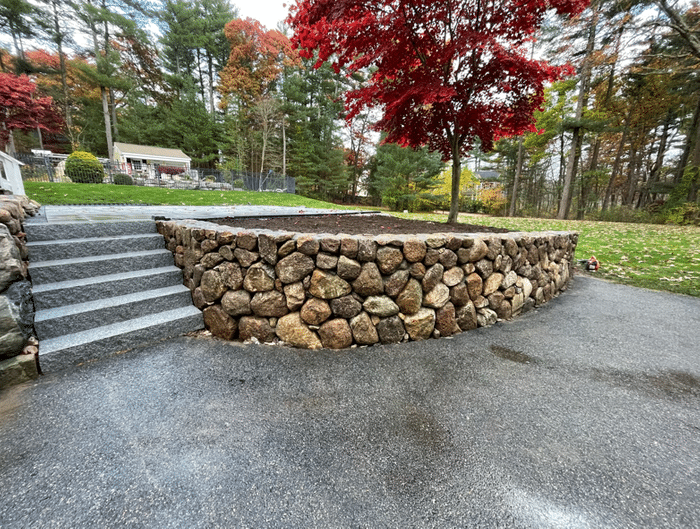
Spring is also a smart time for retaining wall maintenance. Check drainage outlets for leaves, soil, or nests. Call a professional if the wall is leaning, bulging, or cracked.
Test the sealer by placing water on clean pavers. If water beads, the surface still has protection. If it soaks in quickly, hardscape sealing may be due.
Summer Maintenance
Summer wear comes from foot traffic, cookouts, storms, weeds, and insects. Paver patio maintenance should include regular sweeping and quick stain cleanup. Grease, food spills, and leaf tannins are easier to remove.
Paver walkway maintenance matters during busy outdoor months, too. Check high-traffic paths for loose edges, cracked pavers, or low spots. Replace isolated cracked pavers before water enters the base.
After major thunderstorms, inspect joints and drainage paths. Heavy rain can wash out weak joints or reveal low areas. Top off joint material where gaps have opened, or schedule service for larger sections.
Professional paver cleaning in Massachusetts can help when algae, mildew, or deep grime build up. The goal is to clean without damaging the paver face. Aggressive pressure can scar surfaces and blow sand from joints.
Fall Maintenance
Fall maintenance prepares hardscape for ice, snow, and freeze-thaw stress. Deep-clean patios and walkways before winter sets in. Removing grime now helps reduce staining and slippery buildup later.
Leaves should not sit on pavers for long. Wet leaves can stain surfaces and hold moisture against joints. Clear them often, especially from shaded patios and low walkways.
Fall is also a good season to re-sand joints. Full joints help support paver edges before winter movement begins. If the surface needs sealing, complete cleaning and sanding first.
Most pavers need resealing every three to five years. Walkways and pool areas may need attention sooner because of moisture and wear. A professional can confirm whether the surface is ready.
Before the ground freezes, check retaining wall drainage again. Clear outlet pipes and look for soil movement near the wall base. Good drainage helps reduce pressure behind the wall.
Winter Care
Winter care is mostly about reducing damage while keeping surfaces safe. Use plastic shovels instead of metal blades. Metal edges can scrape pavers, chip corners, or damage sealers.
Use sand or calcium chloride instead of rock salt. Apply any deicer sparingly and follow the product label. In spring, rinse residue from pavers and nearby planting beds.
After thaws, look for frost heaves and shifted pavers. Small movement can often wait until spring repairs. Avoid forcing frozen pavers back into place.
When to Repair vs. Replace
Not every hardscape issue requires replacement. Small joint gaps usually need cleaning and resanding. Isolated stained pavers may respond to cleaning and resealing.
Sunken pavers usually need to be lifted, re-based, and set back in place. This repair restores the surface and reduces trip hazards. If sinking returns, drainage or base problems may be involved.
Cracked retaining walls need a professional assessment. Wall cracks, leaning sections, and drainage failures can point to structural pressure. A replacement may be needed when the wall can no longer be used safely.
For older patios or walks with widespread settling, replacement may be more appropriate. Russell Landscaping offers paver patio installation and paver walkway installation when repairs are no longer enough.
How Often Should You Re-Seal Pavers?
Most paver surfaces should be sealed every 3 to 5 years. This timeline depends on sun, shade, drainage, foot traffic, and cleaning habits. High-use walkways and wet areas may need service sooner.
Hardscape sealing helps resist stains and makes routine cleaning easier. It can also refresh color, depending on the product used. The surface should be clean, dry, and properly sanded before sealing.
If you are unsure, try the water test. Beading suggests protection remains. Fast absorption means the surface may be ready for professional paver cleaning in Massachusetts and resealing.
Common Hardscape Mistakes to Avoid
Several maintenance mistakes shorten the life of pavers and walls. The first is pressure-washing too aggressively. Strong water pressure can damage surfaces and remove joint material.
Another mistake is skipping joint sand after cleaning. Empty joints leave edges less supported and allow weeds to gain space. Re-sanding helps lock the surface together again.
Using rock salt is another common problem. Salt residue can stress concrete pavers and nearby landscaping. Finally, never ignore drainage problems around retaining walls.
When to Call Russell Landscaping
Basic sweeping, leaf removal, and light spot cleaning are DIY-friendly. Power washing, re-sanding, sealing, drainage issues, and structural wall work are better left to professionals. Russell Landscaping can help with hardscape maintenance in Merrimack Valley when seasonal care becomes more involved.
We serve homeowners and businesses through residential landscaping, commercial landscaping, and hardscape services. Our team works throughout Wilmington MA landscaping, Bedford MA landscaping, Billerica landscaping, and Chelmsford landscaping areas. For help with how to maintain hardscape in Wilmington, MA, contact Russell Landscaping to schedule a hardscape assessment.
FAQs
Homeowners often have a few follow-up questions after reviewing seasonal hardscape care. These answers explain the basics of cleaning, sealing, joint sand, and long-term paver performance. Use them as a quick reference before planning maintenance or scheduling professional service.
How Often Should I Clean My Paver Patio?
Light sweeping can be done as needed during the outdoor season. A deeper clean once a year is usually enough for paver patio maintenance. Clean sooner if stains, algae, or slippery buildup appear.
Should I Seal My Pavers Every Year?
Most pavers do not need yearly sealing. A 3- to 5-year schedule works for many patios and walks. Heavy use, shade, moisture, and pool exposure can shorten that timeline.
What Is Polymeric Sand?
Polymeric sand is joint sand mixed with binding additives. Once installed and activated correctly, it helps stabilize paver joints. It also helps reduce weed growth and washout.
Can I Use Bleach To Clean My Pavers?
Bleach is not the best first choice for paver cleaning. It can discolor surfaces and harm nearby plants if used incorrectly. Use paver-safe cleaners or ask a professional for help.
How Long Should A Paver Patio Last?
A well-built paver patio can last for decades with proper paver walkway care. Its lifespan depends on base preparation, drainage, materials, and maintenance. Regular paver walkway care and retaining wall maintenance also protect connected hardscape areas.
How Often Should I Clean My Paver Patio?
Light sweeping can be done as needed during the outdoor season. A deeper clean once a year is usually enough for paver patio maintenance. Clean sooner if stains, algae, or slippery buildup appear.
Should I Seal My Pavers Every Year?
Most pavers do not need yearly sealing. A 3- to 5-year schedule works for many patios and walks. Heavy use, shade, moisture, and pool exposure can shorten that timeline.
What Is Polymeric Sand?
Polymeric sand is joint sand mixed with binding additives. Once installed and activated correctly, it helps stabilize paver joints. It also helps reduce weed growth and washout.
Can I Use Bleach To Clean My Pavers?
Bleach is not the best first choice for paver cleaning. It can discolor surfaces and harm nearby plants if used incorrectly. Use paver-safe cleaners or ask a professional for help.
How Long Should A Paver Patio Last?
A well-built paver patio can last for decades with proper paver walkway care. Its lifespan depends on base preparation, drainage, materials, and maintenance. Regular paver walkway care and retaining wall maintenance also protect connected hardscape areas.